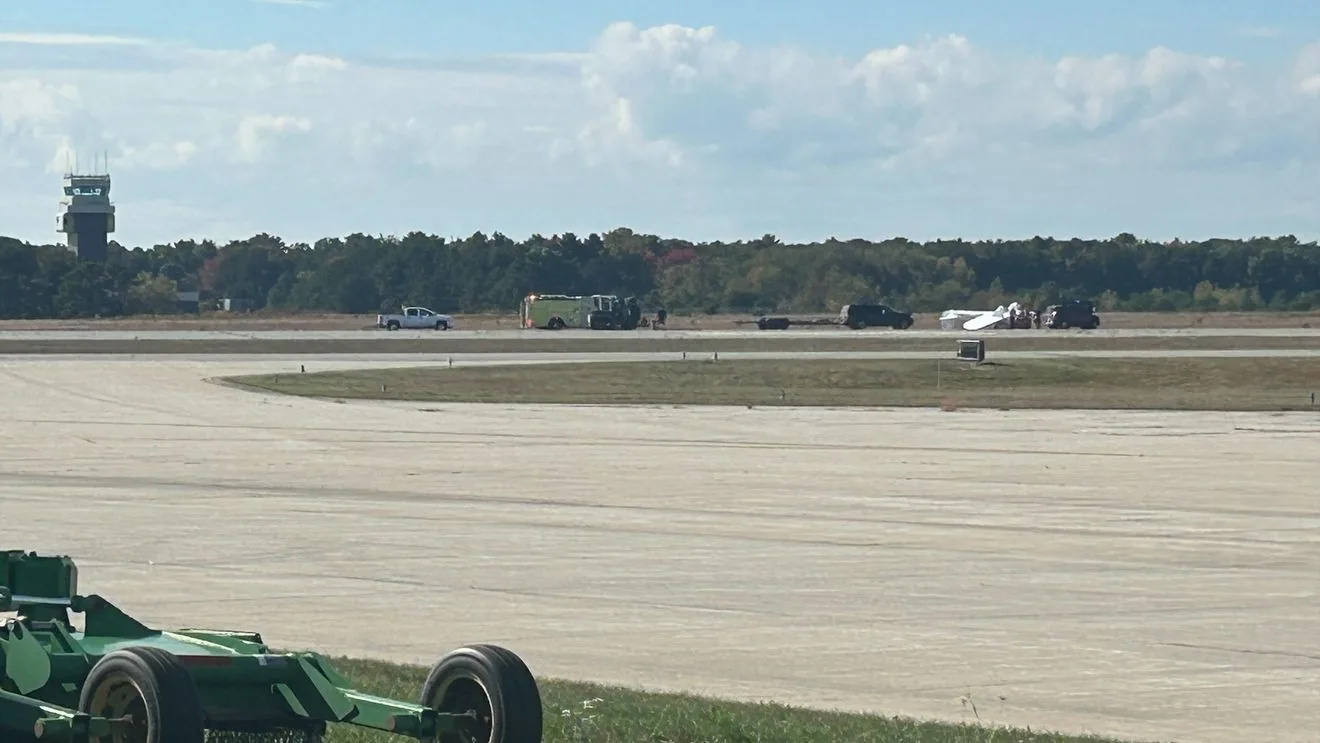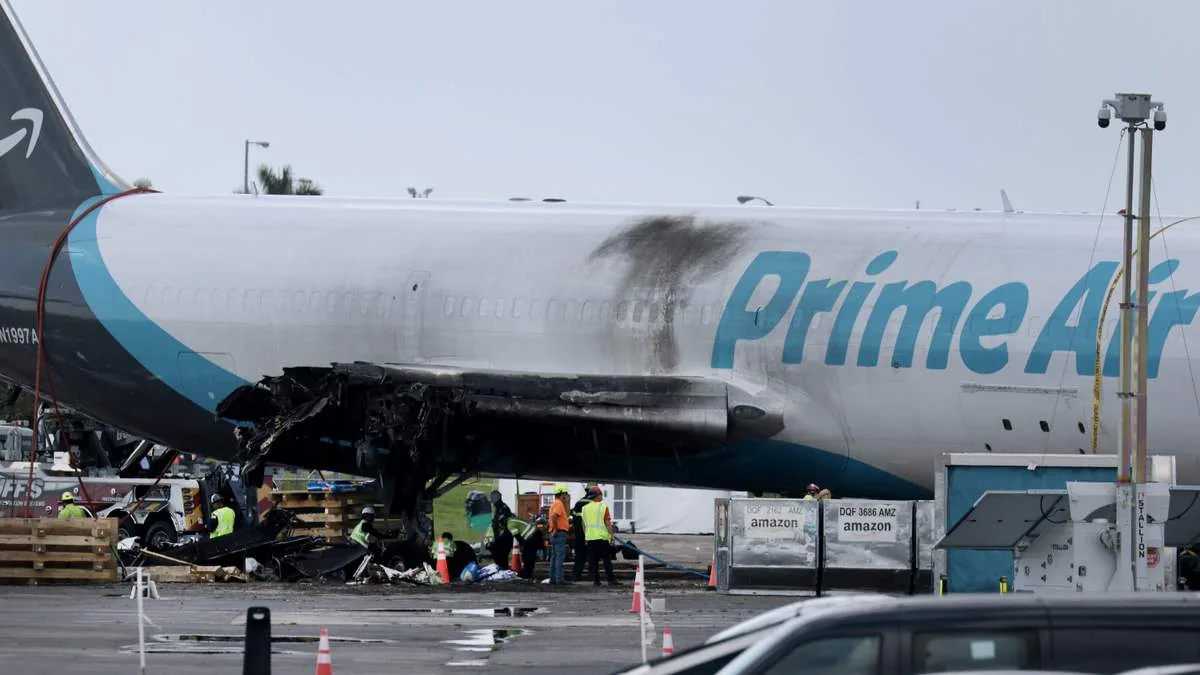
MIAMI, FL — The National Transportation Safety Board has released preliminary findings on the Amazon cargo plane crash at Miami International Airport, giving the first official look at what happened as the Boeing 767 came in to land.
Investigators say the jet crossed the runway threshold too high and too fast before it ran off the runway and crashed. Five people in a cargo van were killed in the wreck.
The NTSB described the findings as an early step, not a final determination, and said the investigation is still underway.
Investigators say the jet crossed the threshold at excessive speed and altitude
The preliminary report centers on the aircraft’s approach to the runway. According to the NTSB, the Boeing 767 was not lined up in a normal landing profile when it reached the threshold at Miami International Airport.
Instead, investigators say the plane was both higher and faster than it should have been. That combination can leave a crew with less room to correct the approach before touchdown or rollout.
The agency has not released a final explanation, but the early findings point to the aircraft’s approach as a key part of the crash sequence.
Runway departure ended in a deadly collision with a cargo van
After crossing the threshold, the Boeing 767 ran off the runway and crashed. The impact involved a cargo van, and the crash killed five people inside that vehicle.
The report does not add new details about the van or the people who were killed, but it makes clear that the runway departure turned a landing problem into a fatal ground accident.
For investigators, the sequence from approach to runway excursion is central to understanding how the crash unfolded and why the consequences were so severe.
The NTSB says this is only the first stage of a larger probe
The findings released this week are preliminary, meaning they are part of an ongoing investigation rather than a final account. The NTSB often issues early updates before completing its full reconstruction of an accident.
That means key questions remain open, including why the aircraft approached too high and too fast and what factors may have contributed to the runway departure. The agency has not announced a final cause.
For now, the public has only an initial snapshot of the crash, with more technical work still ahead.
Miami International Airport crash draws attention to landing safety
Any runway excursion at a major airport draws close scrutiny, especially when it involves a large cargo jet and multiple fatalities on the ground. Miami International Airport is one of the busiest airports in the country, which adds to the concern around the crash.
The NTSB’s early findings highlight how quickly a landing can turn dangerous when an aircraft arrives outside its normal approach parameters. Even without a final cause, the report shows the landing phase as the critical moment in this case.
As investigators continue work, the focus remains on how the Boeing 767 reached the runway and what happened in the seconds before it left the pavement.
Amazon cargo operation under scrutiny as investigators review the crash sequence
The aircraft involved was a Boeing 767 operating as an Amazon cargo plane. The crash places renewed attention on cargo flight operations and the safety margins involved in airport landings.
The NTSB has not said whether any broader operational issues played a role. At this stage, the preliminary report only establishes the aircraft’s speed and height over the threshold, the runway departure, and the deaths on the ground.
More findings will likely emerge as the investigation advances, but the agency’s early message is clear: the landing went wrong before the aircraft ever completed its approach.
Local news that matters, from Dulaney Griffin.