BLOUNT COUNTY, AL — The West Blount Fire District is asking drivers to be more careful around emergency scenes after two separate crashes involving department vehicles in Blount County, Alabama. One collision damaged a fire truck that was protecting crews at an Interstate 65 wreck scene. A second crash days later sent a rescue vehicle off the road and left a firefighter with minor injuries.
Chief Clay Jones said the department is not trying to pin blame on either incident. Instead, he said both crashes are a reminder that emergency responders are exposed to danger even after they arrive at a scene. Jones said the district is fortunate that the injuries were limited and that the outcome was not worse.
Fire truck hit while crews worked an Interstate 65 wreck
According to Jones, the first crash happened while West Blount crews were responding to another motor vehicle accident on Interstate 65 near mile marker 287. The department had positioned its fire truck across two lanes as a protective barrier for firefighters, patients and other emergency personnel working the original scene.
A motorist struck the truck anyway, causing major damage to both the fire apparatus and the civilian vehicle. No one was hurt in that collision, but the impact showed how quickly a roadside response can turn dangerous when drivers fail to slow down or pay attention.
Jones said incidents like that can put firefighters at risk even when they are following standard safety steps. The truck was not there by chance; it was placed to shield workers from traffic while they handled the earlier wreck.
Rescue vehicle struck from behind and pushed into a field
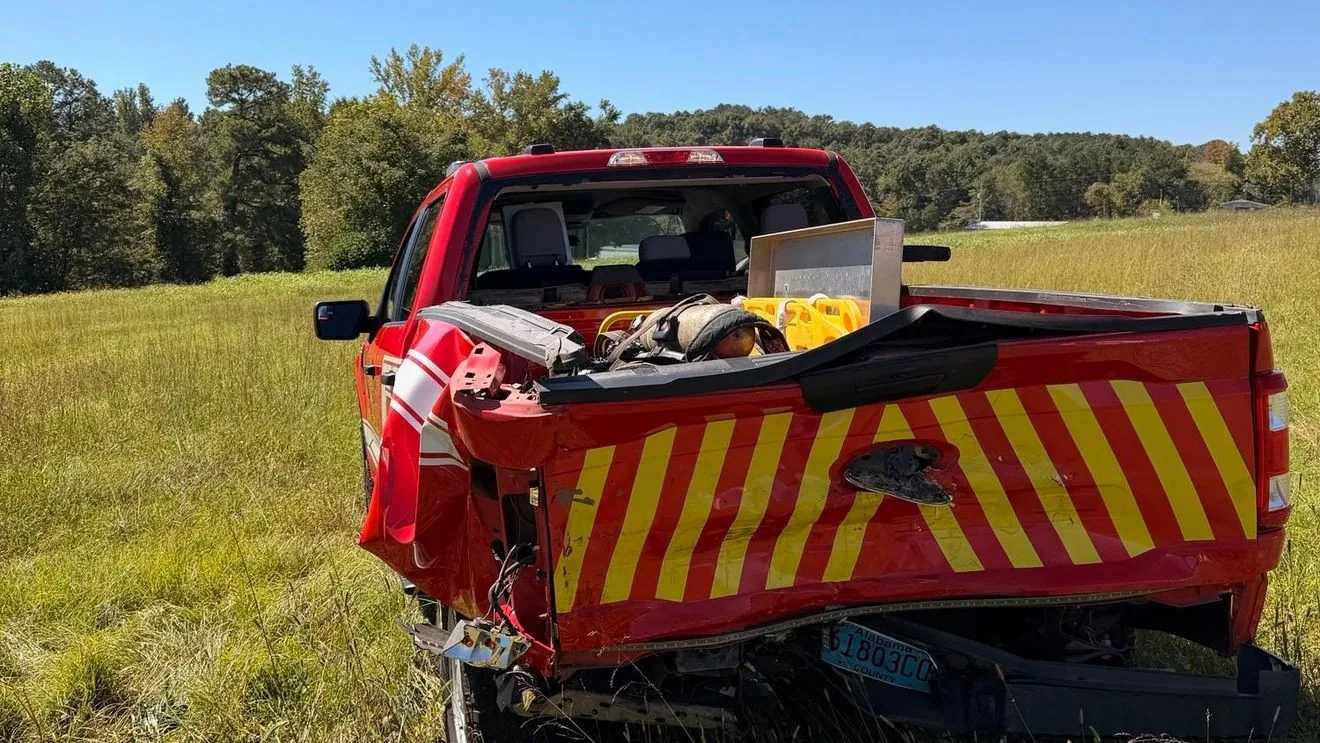
The second crash happened Tuesday when a West Blount firefighter was driving a rescue vehicle and waiting to make a turn. Jones said another vehicle hit it from behind. The force of the collision sent the rescue vehicle off the roadway and into a nearby field.
The firefighter inside suffered minor injuries and was taken for treatment. Jones said the firefighter has since been released after getting several stitches. He is expected to be out of work for several weeks while he recovers.
That injury gave the district a more personal look at the risks emergency workers face on routine trips. Jones said the department was relieved the harm was not more serious.
State investigators are still looking into the second collision
The Alabama Law Enforcement Agency is investigating the second crash, and the circumstances have not yet been determined. Jones said the department is not making assumptions about what caused it and is not trying to assign blame before investigators finish their work.
He said the district has been careful to separate the facts from speculation. That approach matters, he added, because emergency vehicle crashes can involve many moving parts, including traffic speed, driver attention and the conditions around the roadway.
For now, the known facts are limited: a rescue vehicle was rear-ended, a firefighter was hurt, and the vehicle left the road. Anything beyond that remains under review by state authorities.
Damage can pull fire apparatus out of service for weeks or months
Jones also stressed that a crash involving a fire truck or rescue unit is not just a repair issue. When a department vehicle is seriously damaged, it may be unavailable for weeks or even months while repairs are completed or a replacement is found.
That kind of delay can affect the district’s ability to answer calls quickly. A single out-of-service apparatus can force a department to adjust how it covers the area and how it sends equipment to emergencies.
Jones used the crashes to underline how one careless driving decision can ripple far beyond the collision itself. In his view, the damage can affect both firefighter safety and the district’s day-to-day response capacity.
West Blount asks drivers to slow down, move over, and stay alert
The district is urging motorists to slow down near emergency scenes, move over when possible, leave space between vehicles, and cut distractions while driving. Jones said those steps can help protect firefighters, patients and other responders working along the roadside.
He said drivers need to remember that emergency vehicles are often parked in places where workers are exposed and traffic is still moving. A quick glance at a phone or a failure to reduce speed can have serious consequences.
Jones ended with a blunt warning about the risks his crews face. “We have been fortunate twice,” he said. “We don’t want to find out what happens the third time.”
Local news that matters, from Dulaney Griffin.