KENT, WA — Two men accused of posing as Deputy U.S. Marshals during a violent home invasion in Alabama have been arrested on opposite sides of the country in a coordinated federal operation. Authorities say the case involved task forces in Washington and California working together to find the suspects after they left the Southeast.
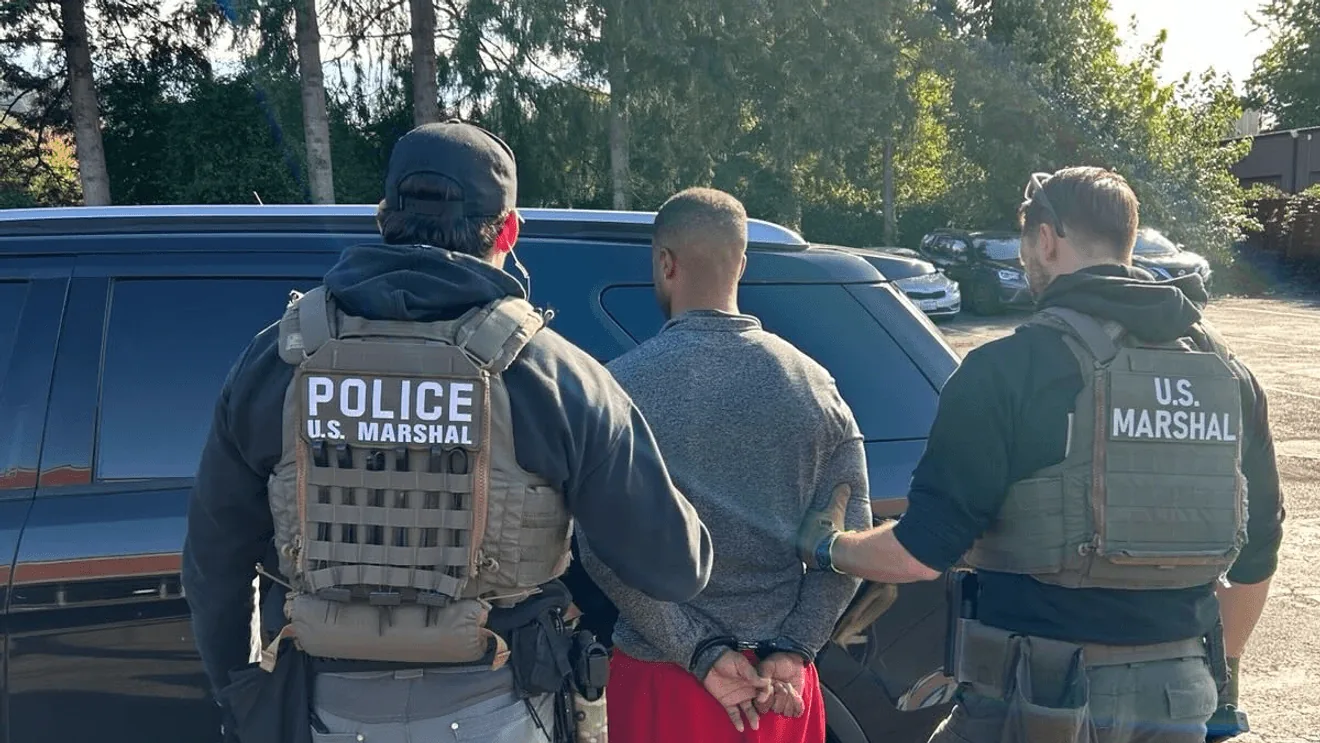
Zealand Adams, 41, was arrested in Kent, Washington, and Ramiro Vasquez, 39, was arrested in Chico, California. The U.S. Marshals say both men were wanted by the Auburn Police Department in Lee County, Alabama, on multiple felony charges tied to the home raid.
Authorities say the suspects entered the home pretending to be law enforcement
Investigators say Adams and Vasquez went into an Alabama home while pretending to be law enforcement officers. Authorities allege they held the residents at gunpoint and took valuables during the invasion.
The charges listed by the U.S. Marshals include robbery, burglary, unlawful imprisonment and impersonating a peace officer. Auburn police asked the Gulf Coast Regional Fugitive Task Force to help locate the men after the alleged attack.
Officials said the impersonation aspect made the case especially serious because it put residents at risk while also exploiting public trust in law enforcement. The arrests were later carried out without incident.
Leads from Alabama pointed investigators to Kent and Chico
The Gulf Coast Regional Fugitive Task Force determined that Adams had fled to Kent and that Vasquez had gone to Chico. Once those locations were identified, the information was passed to federal task forces operating in Washington and California.
The U.S. Marshals Pacific Northwest Violent Offender Task Force in Washington and the Pacific Southwest Regional Fugitive Task Force in California then coordinated simultaneous arrests. Authorities said the teamwork allowed officers to move quickly once the suspects were found.
Both men were booked into local jails after being taken into custody. They are now waiting to be extradited back to Alabama to face the charges tied to the home invasion.
U.S. Marshals say impersonating officers threatens public safety
Acting U.S. Marshal Donrien Stephens for the Western District of Washington said impersonating law enforcement undermines public trust and creates a danger for the community. He said local and federal agencies showed strong teamwork in bringing the suspects into custody.
The statement reflects a broader concern for officers who have to sort out real law enforcement from people falsely claiming the authority. In cases like this, investigators say the deception can make a violent crime even more dangerous for victims and responders alike.
The arrests also highlight how federal fugitive task forces can work across state lines when a suspect leaves the area where the crime happened.
Adams has a long criminal history tied to a Utah standoff
Authorities say Adams has a criminal history that includes a 2014 incident in Utah in which he held a 2-year-old hostage during a five-hour standoff with police after a high-speed chase. That earlier case led to convictions for kidnapping in Utah and manslaughter in Louisiana.
The past case was included in the Marshals’ account of Adams’ background as investigators described the seriousness of the fugitive hunt. Officials did not say the prior convictions were connected to the Alabama home invasion, but they were part of the criminal history they cited.
By contrast, Vasquez’s background was not described in the information released by authorities. The current case remains centered on the alleged Alabama robbery and the arrests that followed on the West Coast.
Pacific Northwest task force is built for violent fugitive cases
The Pacific Northwest Violent Offender Task Force is led by the U.S. Marshals and brings together officers from federal, state and local agencies across Washington, Oregon and Alaska. Its mission is to help track down violent fugitives who may move across jurisdictions.
That structure helped investigators in this case when the search spread far beyond Alabama. Once the suspects were located in two western states, the separate task forces were able to act at the same time and make the arrests without incident.
For Alabama authorities, the next step is extradition. For federal partners, the case is another example of how a fast-moving violent fugitive investigation can depend on coordination from one part of the country to another.
Local news that matters, from Dulaney Griffin.