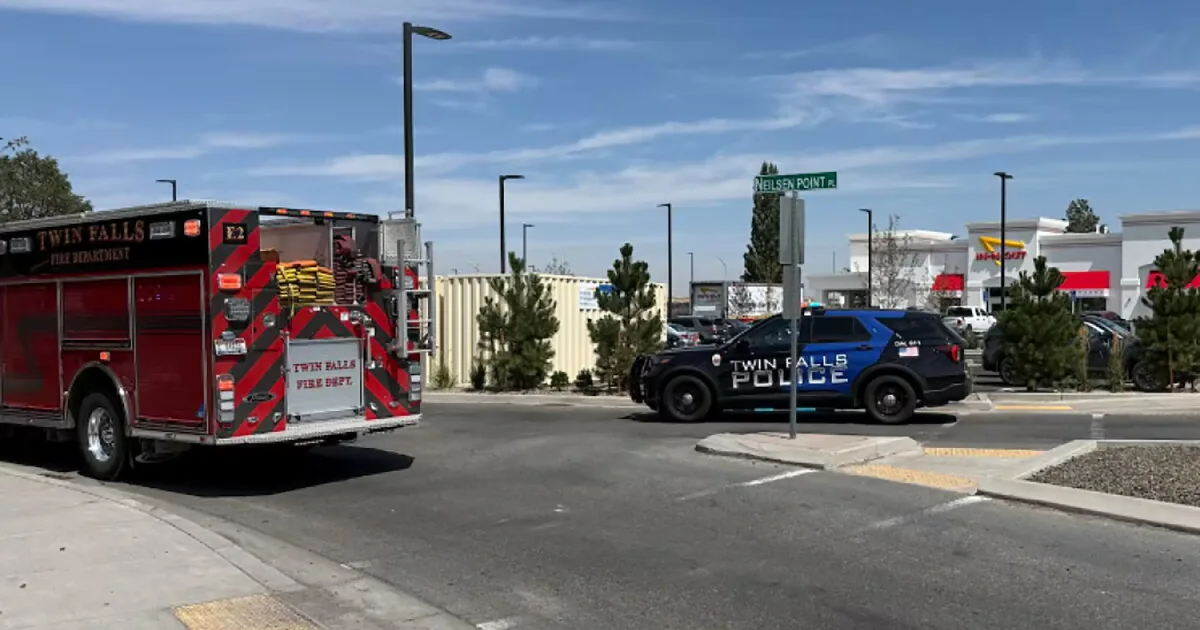
TWIN FALLS, ID — A Twin Falls prosecutor has cleared a police officer after reviewing the officer’s response during the August shooting at In-N-Out. The decision centers on the officer’s use of force during the incident and whether it crossed the line into criminal conduct.
According to the Twin Falls Police Department, Prosecuting Attorney Grant Loebs concluded the officer had a reasonable belief that he was acting to protect civilians running away from an active-shooter scene. Loebs also said there was not enough evidence to support criminal charges against the officer.
Prosecutor says the officer was acting to protect fleeing civilians
Loebs’ conclusion is the key finding in the review. In the police department’s release, he said the officer reasonably believed he was defending people who were trying to get away as the shooting unfolded.
That framing matters because the review was not only about what happened in the moment, but about the officer’s perception under pressure. The prosecutor’s decision indicates that, based on the available evidence, the response fit within a defensive context rather than criminal wrongdoing.
The department said the case was reviewed after the August incident, with the use-of-force decision specifically examined as part of that process. No additional details about the officer’s identity or the exact actions taken were included in the department’s statement.
What the Twin Falls Police Department said about the review
The Twin Falls Police Department issued the release describing Loebs’ findings. In that statement, the department said the prosecutor determined the officer’s belief was reasonable and that the evidence did not justify a criminal case.
The department’s announcement did not lay out a full narrative of the shooting response, but it made clear that the review focused on the officer’s conduct during the active-shooter event. The language used by the prosecutor suggests investigators and prosecutors looked closely at whether the officer’s actions aligned with the threat developing around civilians.
Police have not said in this statement whether any other part of the August incident remains under review. The release also did not describe any separate findings about the shooting itself beyond the officer response.
The August In-N-Out shooting remains the backdrop to the decision
The prosecutor’s ruling comes months after the August shooting at the Twin Falls In-N-Out. The officer’s response was evaluated in the context of that event, which had already drawn public attention in the city.
By focusing on the active-shooter scene, Loebs signaled that the officer’s split-second judgment was judged against the danger civilians were facing. That is the central reason the review ended without criminal charges, according to the police department’s account of the decision.
The release does not say how long the review took or what records were considered. It does, however, show that the officer’s actions were examined carefully before the prosecutor reached a final conclusion.
Reasonable belief and insufficient evidence drove the no-charge decision
Two phrases guided the outcome: “reasonable belief” and “insufficient evidence.” Together, they show why the prosecutor declined to move forward with criminal charges.
First, Loebs determined the officer could reasonably believe he was defending civilians who were escaping the scene. Second, he said the available evidence did not rise to the level needed to support a charge. In practical terms, that means the legal threshold for prosecution was not met.
The department’s release did not identify any specific charge that had been considered. Instead, it emphasized the broader conclusion that the officer’s response was not criminal under the facts reviewed.
What the ruling means for the officer and the department
The prosecutor’s decision removes the immediate threat of criminal charges tied to the officer’s response. For the Twin Falls Police Department, it also provides an official determination that the action was taken in what was judged to be a defensive context.
That kind of ruling can matter beyond one case because it confirms how law enforcement actions are viewed after an active-shooter event. Here, the prosecutor’s conclusion supports the department’s position that the officer was responding to a dangerous and fast-moving situation.
The police department did not announce any further action after Loebs’ review. Based on the release, the matter now appears to be resolved from a criminal standpoint, with the prosecutor finding no basis for charges tied to the officer’s use of force.
The shooting response now sits within Twin Falls’ public record
With the review complete, the August In-N-Out shooting response now includes a formal prosecutorial finding. The Twin Falls Police Department said Loebs’ conclusion was that the officer acted with a reasonable belief that civilians needed protection while fleeing the scene.
That decision closes the question of whether the officer’s use of force should lead to charges, at least based on the evidence the prosecutor reviewed. The statement does not describe any additional disciplinary process or civil proceeding, only the criminal review outcome.
For Twin Falls residents following the case, the key takeaway is straightforward: the prosecutor declined to charge the officer, and the department publicly framed that decision as a finding that the response was defensible under the circumstances.
Local news that matters, from Dulaney Griffin.