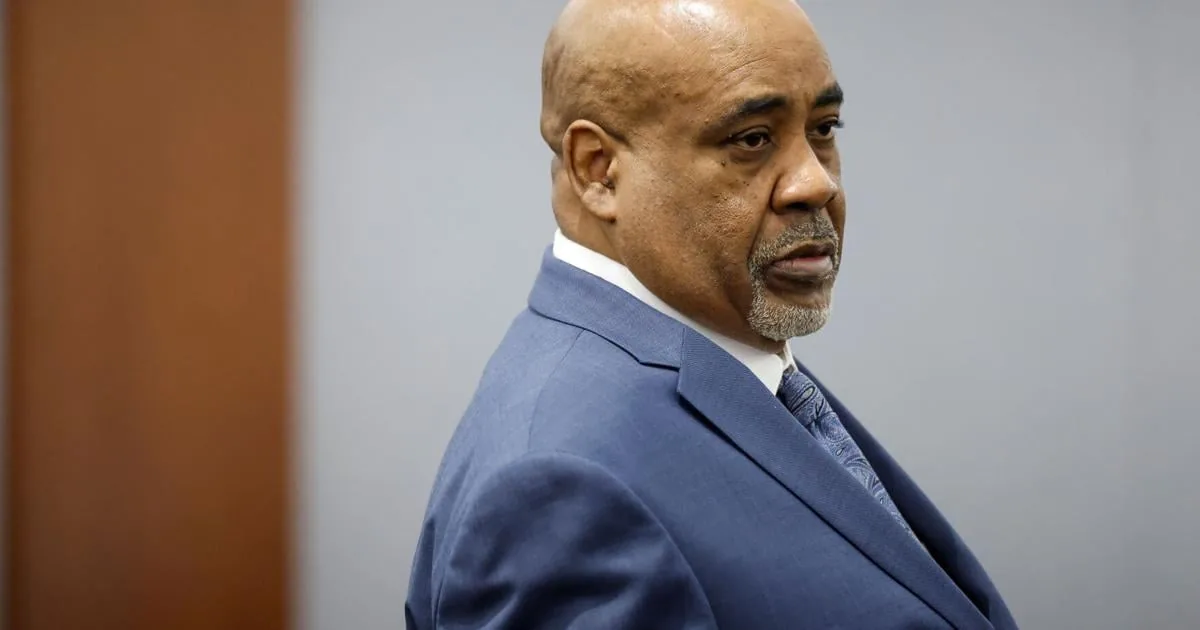
LAS VEGAS, NV — A Las Vegas jury on Monday found Duane “Keffe D” Davis guilty of first-degree murder with a deadly weapon in the 1996 killing of Tupac Shakur. The 63-year-old had been on trial for weeks in a case that has shadowed hip-hop history for nearly 30 years.
The panel reached its verdict after deliberating for less than three hours. Davis now faces the possibility of life in prison when he is sentenced in October.
Shakur’s sister, Sekyiwa “Set” Shakur, cried and hugged prosecutors after the decision was read. Davis’ son covered his face with one hand as the courtroom reacted to the outcome.
How It Unfolded
Prosecutors said Davis set the killing in motion after a fight earlier that night involving his nephew and Shakur along with Death Row Records co-founder Marion “Suge” Knight. Chief Deputy District Attorney Binu Palal told jurors that Davis got a gun and went looking for Shakur.
According to prosecutors, Davis was inside a white Cadillac from which the shots were fired, even if he did not personally pull the trigger. They argued that younger men in the car, including his nephew, would have followed his lead because of his position as a gang figure.
Palal urged the jury to hold him responsible for the murder. He also pointed to Davis’ changing accounts over the years as evidence that his own words tied him to the shooting.
Defense Position
Defense attorney Michael Sanft countered that the state never proved Davis was the person directing the shooting. He told jurors there was no physical evidence placing his client in Las Vegas on Sept. 7, 1996, and said prosecutors lacked records, including phone evidence, to support their case.
Sanft argued that Davis had exaggerated his own role in public statements and in a book to build attention and make money. He said that bravado should not be treated as truth, especially when investigators could not back it up with forensic proof.
During closing arguments, Sanft repeatedly challenged the idea that Davis had ever been the one calling the shots before or after the attack. He said the government had not shown enough to connect him to the gunfire.
The Trial Record
Jurors heard from 24 prosecution witnesses and three defense witnesses over nine days of testimony. The panel included 16 jurors, with four alternates among them.
Prosecutors said they would dismiss a gang enhancement charge because of witness logistics. After the verdict, prosecutors declined to comment and family members said they were waiting for sentencing.
The case centered on the night Shakur was shot after a red-light stop in Las Vegas. He died six days later from his wounds, while Knight was injured but survived.
Why It Mattered
For years, no one had been charged in Shakur’s death. The case drew constant attention from hip-hop fans and crime followers because of Shakur’s fame and the lasting mystery around the shooting.
Witnesses described a tense rivalry between the Mob Piru and Southside Compton Crips, and prosecutors said those ties stretched into the orbit of Death Row Records and Bad Boy Records. Davis is the only person still alive among the four men prosecutors say were in the Cadillac.
Trial testimony also revisited the unsolved killing of the Notorious B.I.G. six months later, which came up because Davis was briefly considered a suspect before being ruled out. That death remains unsolved, adding another layer to a pair of cases that have long fascinated the public.
Local news that matters, from Dulaney Griffin.