JACKSON, WY — Drivers taking a heavy truck, RV or trailer down Teton Pass now have to complete a new safety course before using Wyoming Highway 22 over the mountain. The WY22 Safe Pass program started Thursday and applies to RVs, vehicles towing any trailer, and any vehicle weighing or rated for 10,000 pounds or more.
The certification is free, takes about five minutes and stays valid for one year. WYDOT says the goal is simple: make sure drivers know what they are facing before they begin the steep descent.
The change comes after a summer marked by fatal crashes on the pass and renewed attention on brake management, runaway-vehicle systems and the steep grades that make the route unusually demanding.
Deadly crashes pushed WYDOT to add another layer of protection
The new requirement follows two serious crashes in 2025 and an earlier fatal RV wreck in 2024 that highlighted the risks of descending the pass with heavy vehicles.
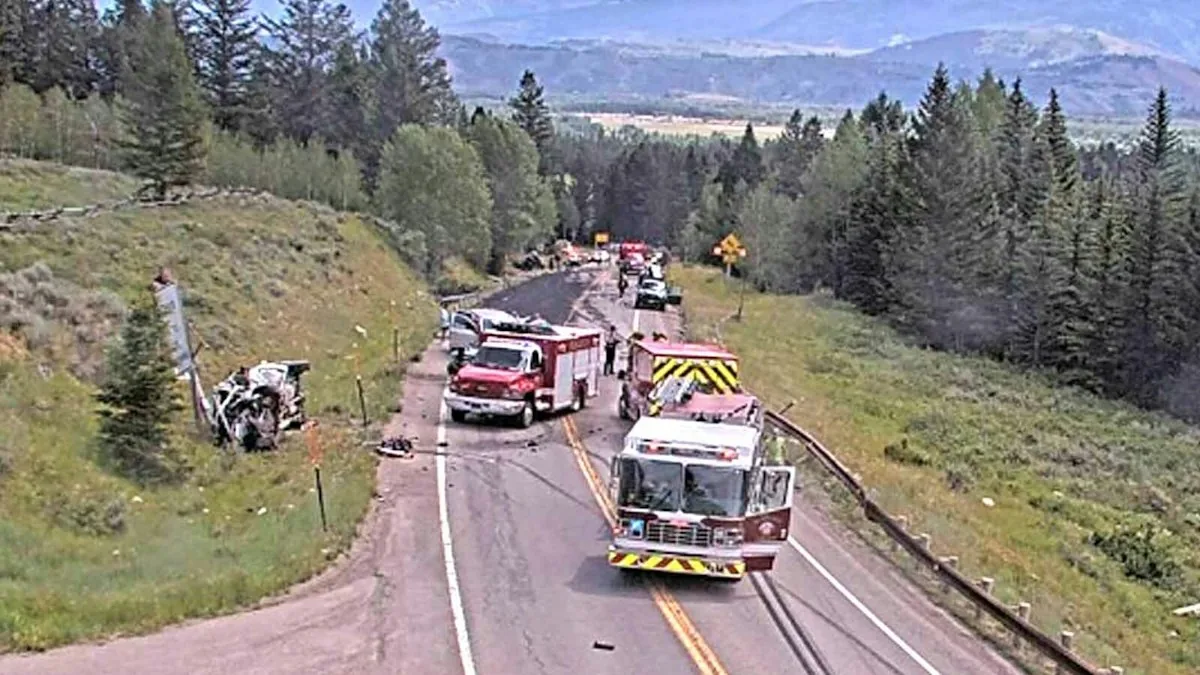
On July 7, a dump truck heading toward Jackson lost its brakes and slammed into a line of vehicles, killing two people. Investigators later said the truck’s brakes faded after the driver used them too much while coming down too fast. The driver also passed a runaway vehicle escape ramp shortly before the crash and has been charged with two misdemeanor counts of homicide by vehicle.
In September, a 41-year-old Colorado man died when the Ford F-250 he was riding in picked up speed on the descent, crossed the opposite lane and went off the highway. The Wyoming Highway Patrol investigation into that crash is still open.
The online course walks drivers through brakes, gearing and escape options
Chris Howerton, who has held a Class A commercial driver’s license for 32 years, tried the program himself and found the process fast. After setting up an account, users must spend at least three minutes on the educational portion before moving on.
The course includes two videos. One explains the mountain’s runaway-vehicle systems, including the CatchNET truck arrestor and the escape ramp, and tells drivers what to do if they lose control.
The second focuses on downhill driving: using a low gear, relying on engine braking, avoiding brake riding and recognizing brake fade. Drivers also review a pre-trip inspection list and information about weight, trailer and seasonal restrictions on the pass.
No final test, but drivers must certify they understand the risks
Instead of a final exam, the program uses a series of checkboxes. Drivers confirm they reviewed the material and their owner’s manual, understand lower gears and engine braking, and know where the escape ramp and CatchNET system are located.
They also agree to inspect their vehicles before the trip, make sure brakes and trailer brakes are working, pull over at the first sign of brake trouble and let the system cool for at least 20 minutes. Another box says they will follow posted speeds, weight rules, trailer limits and chain requirements when they apply.
The last step requires the driver to certify, under penalty of perjury, that the information is correct and that they will comply with the rules. Once submitted, the driver can download a digital certificate.
Truckers and RV managers say the 10% grade is the real problem
Kevin Hawley of the Wyoming Trucking Association said the pass is not just a trucking issue. He pointed out that an ordinary mountain grade is often about 6%, while parts of Teton Pass reach 10% for roughly three miles.
That long, steep stretch leaves little room to recover if a driver makes a mistake, Hawley said. He supports Safe Pass and would like local residents and daily commuters to take it too, since passenger vehicles can also create dangerous conditions.
Brandon Guymon, a safety manager for ND Nursery and Landscaping in Driggs, Idaho, said the pass gives drivers no break point where the hill eases off. He said getting information in front of unfamiliar drivers can help, but it cannot replace real mountain experience.
RV park managers see brake trouble and unfamiliar drivers every summer
Chris and Elin Howerton, who manage The Virginian RV Park in the Jackson area, said the pass regularly funnels first-time RV travelers into their park. Elin said she can often tell which guests came over Teton Pass before she even asks.
She joked that she can smell their brakes, and both managers said the range of mountain-driving experience among RV visitors varies widely. Some travelers know how to use lower gears and manual mode. Others have never faced a mountain descent before.
Last summer, Chris said, six or seven privately owned RVs had to be towed off the pass and into their park. One needed brake work after it arrived. Even with decades of trucking experience, Chris said he would not take his own RV over Teton Pass.
WYDOT and industry groups want more education before drivers start downhill
Guymon said brake fade is something he has felt firsthand while descending South Pass near Lander, and he still remembers how bad it was. He described the sensation as the worst feeling in the world and said once it starts, the driver is already behind the curve.
WYDOT’s mountain-driving guidance tells motorists to use low gears and engine braking instead of riding the brakes, pull over to let hot brakes cool, and use the horn plus a runaway ramp or CatchNET if control is lost. Guymon said the warning signs are often there before the failure becomes total, including the smell of burnt brakes.
Hawley said the trucking association plans to work with WYDOT, the Wyoming Highway Patrol and Idaho partners to spread the word, including to carriers outside the region. Guymon, meanwhile, wants a dedicated brake-check area and more enforcement before drivers commit to the descent.
Local news that matters, from Dulaney Griffin.